
Yogi SAA Ramaiah: Apostle of Siddhantham of Tamil Kriya Yoga
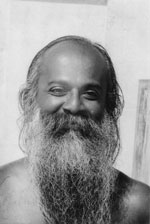
On May 9, 1923, at the ancestral home of H.H. Annamalai Chettiar, a young woman, Thaivani Achi, gave birth to her second son, Ramaiah, a name meaning « Ram worshipping Shiva. » Two years earlier, H.H. Annamalai Chettiar had taken part in the first private flight between England and India; he owned a personal airport not far from his home. His family was among the wealthiest in the country; over the preceding centuries, they had amassed a fortune through their banking and trading businesses, and their influence extended throughout Southeast Asia.
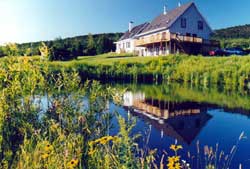
Their home, « Ananda Vilas » (« The Place of Grace »), was one of the two largest estates in the village of Kanadukathan in « Chettinad, » 60 kilometers north of Madurai, the ancient capital of Tamil Nadu. Chettinad was inhabited mainly by members of the Nattukottai Chettiar clan, a clan made up of several hundred families. The Chettiars were the most powerful bankers in Southeast Asia; their empire encompassed South India, Malaysia, Ceylon, Vietnam, Burma, and Indonesia. Over the centuries, they financed the construction of most of South India’s great temples and their gopurams.
P. Chidambaram, the current Finance Minister of India, is a cousin of Yogi Ramaiah; he built his career on a solid reputation for honesty and great financial acumen. Ramaiah’s grandfather, S. Annamalai, was a philanthropist and businessman. His uncle, Raja Sir Annamalai Chettiar, had made his fortune importing teak wood from India to South India and later became a leading industrialist. His princely mansion, which measured several hundred square meters and was located next to Ananda Vilas, had a garage for thirteen automobiles. However, Ramaiah’s young father was more interested in airplanes, cars, and racehorses; he spent his time gambling and squandering the family wealth. Ramaiah’s mother came from the same Chettiar clan and was a very religious young woman, inclined towards spirituality and mysticism. She was the disciple of « Chela Swami, » an enigmatic « child-like saint, » and saddhu, an ascetic, who passed by their house from time to time. Since he wore no clothes, the village children treated him like a madman and threw stones at him, and yet, no one knew why he was always smiling. The village children would offer him bananas or massage his feet with reverence, and he would smile; soon after some of them would mock or tease him, he would respond with a smile. No one ever knew where he lived or where he went when he disappeared for weeks and months. He came and went like the wind. Thaivani Achi was very devoted to him.
Young Ramaiah was educated by tutors and experienced the lifestyle of members of the highest elite of colonial India. He played golf, wore English clothes, and often traveled by car to Madras, some 300 kilometers further north; his father owned most of the properties there, which ran along the seafront south of San Thome Cathedral, for more than a mile. Ramaiah was interested in science and Tamil literature. While his father was squandering the family fortune, Ramaiah was pursuing a university education. His father had wanted him to go into business, like any good Chettiar, but Ramaiah remained adamant. When he was admitted to the most prestigious institution in South India, the University of Madras, Presidency University, in 1940, he asked his father for permission to major in geology while pursuing Tamil Studies as a minor. It was only after heated discussions and the intervention of Ramaiah’s mother that SA Annamalai agreed.
Ramaiah was a brilliant student; when he graduated in 1944, he was top of his class. He applied for a doctorate in geology at Johns Hopkins University in Baltimore, USA, and was accepted. His father opposed this plan; Ramaiah was to begin his career in the family empire. Ramaiah managed to convince his father to let him leave for America. However, he first had to get married. For several years, Ramaiah had been engaged to Solachi, a young woman whose wealthy family lived across the street from Ananda Vilas. After the wedding, Ramaiah and his young wife began preparations for a long sea voyage to America. But fate decided otherwise; Ramaiah contracted bone tuberculosis.
The best British doctors were brought in to treat him; but bone tuberculosis was and still is an incurable disease. The only solution was to prevent the disease from spreading beyond his legs by immobilizing his body in a plaster cast, from his feet to his neck. In this way, the progression of the disease would be stopped. Ramaiah would remain in this situation, hanging from the canopy of his bed, for six years. His family left him alone with his young wife and a few servants in a seaside house at number 2 Arulananda Mudali Street (now Arulandam Street), in San Thome, Mylapore, Madras.
While such conditions would likely have driven anyone to despair, Ramaiah possessed a strength that would allow him to overcome this difficult ordeal. His mother had instilled in him her love for spirituality; instead of viewing his situation as a condemnation, he understood that he could benefit from it by exploring the inner dimensions of his soul.
An insatiable reader, Ramaiah studied the classics of Indian spiritual literature. He was particularly touched by the poems of Ramalinga Swamigal and the writings of Sri Aurobindo. For three generations his family had served Ramana Maharashi, whose method of Vichara Atman he loved. Unable to travel or engage in any activity, he began to meditate regularly and whenever an important saddhu or guru passed through the area he would send his driver with an invitation; Intrigued by the sincerity of this young man immobilized in a plaster cast, they came to visit him and initiate him into the art of meditation and breathing. Unable to explore the outside world, he turned his attention to the inner world; having no other distractions, he progressed rapidly. One of the sadhus who had the most influence on his development was a middle-aged man, Prasananda Guru. He was a famous tapasawi, an ascetic who could remain motionless, in meditation or trance, for weeks. Because he had the power to cause rain, he was sometimes called to drought-stricken regions. Thus, in 1948, in Chettinad, he ended a three-year drought after practicing 48 hours of intensive meditation, tapas, at the Brahmanoor Kali temple, a kilometer from the village. At the end of a 48-hour mandala, torrential rain fell on the village. Since then, drought has never struck the region again.
Omkara Swami was also one of Ramaiah’s first gurus. A former postal worker, he had achieved some fame as a tapaswi, who could spend 48 or even 96 days in samadhi, without ever moving. These gurus shared with Ramaiah their profound knowledge of yogic practices. In 1952, Ramaiah wrote and published a biography of Omkara Swami, entitled « The Holy Beni. » Their friendship lasted until Omkara’s death in the 1960s.
On March 10, 1952, the day Yogananda attained mahasamadhi in the United States, Mauna Swami, an eccentric sadhu and disciple of Shridi Sai Baba, came to visit Ramaiah at his home in San Thome. After giving a demonstration of his clairvoyant powers, he confidently predicted that Ramaiah would soon be cured. But before the prediction came true, Ramaiah succumbed to despair and decided, one night, to end his life by holding his breath. While he was already holding his breath, he heard a voice say to him, « Don’t take your life! Give it to me. » Surprised, he took a deep breath, wondering who it could be. He realized that it must be the mysterious figure who had been appearing to him in meditation ever since Mauna had visited him. At the first apparition, he had a vision of Shridi Sai Baba wearing his orange scarf tied around his head. Impatient, he asked Shirdi Sai Baba, « Could you be my guru? » The reply was, « No, but I will reveal to you who your guru is. » It was then that he saw his guru for the first time, Babaji appeared to him.
The next morning, when Ramaiah awoke, he was cured. The British doctor was summoned, and the cast was removed. To everyone’s surprise, the doctor’s examination revealed that the dreaded disease had disappeared. After a few days, Ramaiah had regained the use of his legs. He began to chant the name « Babaji » softly, then the mantra « Om Babaji, » and finally the « panchakra » mantra consisting of the five words « Om Kriya Babaji Nama Aum. »
A few days had passed when in a newspaper he found an advertisement for a book on the saint Satguru Rama Devi, entitled « 9 Boag Road, » like the address of her residence in Madras. The author, V.T. Neelakantan, was a renowned journalist. Ramaiah sent him a card asking for a copy of the book; the card began: « Dear Atman. » The journalist thought the agent must be a moneybag, a rich idler, however, driven by curiosity, he decided to visit her in San Thome.
Thus began a friendship and collaboration that lasted nearly fifteen years. VT Neelakantan frequently received nightly visits from the same mysterious figure, Babaji, in the room where he performed his pujas in Egmore, Madras. Soon after, Babaji revealed to Neelakantan that he would work with Ramaiah to create a community of yogis bearing his name, the « Kriya Babaji Sangham, » and that he would also write and publish his teachings in several books. Over the next two years, Babaji would dictate three books to the man he called « my son » during his nightly visits. These books are: « The Voice of Babaji and Mysticism Revealed; » « The Solution of All Diseases; » « The Death of Death. »
VT Neelakantan, then 52, had for several years been the correspondent in Japan and London for one of India’s leading newspapers, the Indian Express. He had become a confidant of Pandit Nehru, the Congress Party president who would go on to become Prime Minister of independent India in 1947. Before the war, he had worked for over fifteen years with Annie Besant, president of the Theosophical Society and successor to Madame Blavatsky, who had introduced him to occult practices. Married, he had four sons and one daughter. In the late 1940s, he left his family and went to the Himalayas, where he lived as a renunciate for two years; during this time, he studied with several saints, including Swami Sivananda.
On October 10, 1952, the Kriya Babaji Sangham was officially established. Lectures, meditations, and other public activities were held at Ramaiah’s residence in San Thome. Ramaiah was the president, and VTN the Acharya. The acquisition of printing equipment made it possible to publish the Kriya Yoga Magazine several times a year. Despite VTN’s fragile health, other books were written; Ramaiah wrote the introductions, and VTN the texts that Babaji dictated to him. Babaji began to guide the sadhana of VTN, Ramaiah, and Solachi, giving them precise instructions, especially on meditations and mantras.
Babaji also began appearing to Ramaiah, and in 1954, he instructed him to travel to Badrinath in the Himalayas. Babaji asked him to leave the village temple, 3,500 meters above sea level, and to take nothing with him except his loincloth. Ramaiah, then 31, set out north to the valley through which flows the Alakanantha River, one of the main sources of the Ganges.
One day he met two sadhus sitting on a stone, one of them smiled at him, the other gave him a disapproving look and started insulting him violently. « How dare a black-skinned South Indian walk around here, with nothing but a loincloth? He jeered at him. Ramaiah continued on his way, hissed at by the sadhu, and then sat down on a stone to meditate. Several hours had passed when he heard someone approaching, urging him to go down to the village for something to eat. Ramaiah replied that he would not go down and that he wanted to be alone. A long time later, when it was already dark, the sadhu who had smiled at him came to him and placed some food in his mouth. « Jai Babaji, » thought Ramaiah, « Even in this cold, in these desolate, treeless places, Babaji takes the trouble to feed me. »
After three days of wandering, Babaji revealed himself physically to Ramaiah and began his initiation into the sacred science of Kriya Yoga. It was in his own cave, beside the icy lake of Santopanth Tal, 30 kilometers north of Badrinath, that Ramaiah learned, over the next few months, the complete system of 144 Kriyas or techniques, including breathing, postures, meditations, and mantras. He also had the pleasure of meeting Babaji’s chief disciples, Annai Nagalakshimi Deviyar, also called Mataji, and Dadaji, also known by the name of his previous incarnation: Swami Pranavanandar, and other close disciples of the eminent Satguru. Among other things, Babaji taught him a breathing technique that allows one to endure the coldest temperatures.
Upon his return to Madras after spending several months in the Himalayas, Ramaiah engaged in a very rigorous tapas, a period of intense practice, during which he worshipped the Divine Mother in the form of Kali in her most terrifying aspect. The worship of Kali is considered very effective when one wants to purify oneself of one’s own desires or overcome limitations such as fear and anger. She personifies detachment from the attachments of the ego, symbolized by the heads she decapitates. In the Yoga Sutras, Patanjali presents detachment, vairagya, as the main method of classical Raja Yoga. When one sits in a room for several consecutive days, human nature rebels, and it seems that only complete surrender to the Divine, in the form of Mother Nature, Kali, could allow one to overcome the resistance of one’s ego. Tap means « to warm » and tapas means « to strengthen by fire » or « willful defiance; » This is the original name for Yoga. Tapas begins with the expression of a vow, not to leave a place, not to eat, not to speak for a specific period, like a 48-day mandala for example. The forty days that Jesus spent in the dessert were a form of tapas. After completing his tapas, Ramaiah had experienced a new birth; he had experienced deep meditative states or Samadhi, and he would from that moment on be known as Yogi Ramaiah. Babaji had given him several specific missions: To study physiotherapy and yogic therapy so that he could help those who, like himself, were disabled; to begin teaching Kriya Yoga in India and abroad; and to research and collect the writings of his own gurus: Boganathar and Agastyar.
Yogi Ramaiah and Solachi moved to Bombay, where he enrolled at the city’s premier medical college, the GS Medical College and Hospital.
He also began to study the healing properties of the postures he then prescribed as treatment for his patients. In 1961, toward the end of his studies, he asked his professors for permission to conduct an experimental clinic. He told them he believed he could cure more than twenty functional problems, including diabetes, hypertension, appendicitis, and infertility, using yoga alone, all in less than three months. Permission was granted, and the patients were selected by the attending physicians. For three months, he worked with these patients daily, guiding and encouraging them in their yoga practice, to which he added diet and sun treatments. Three months passed, and to the doctors’ surprise, all the patients were cured. This experience earned him an honorary degree. Preferring not to waste any more time waiting for the academic formalities to be completed, he returned to Madras where he established a free private clinic for the poor at San Thome; the clinic specialized in disabilities and also included an orthopedic rehabilitation center at Adyar, Madras. This free clinic remained open for ten years; the orthopedic rehabilitation center still exists and is located on Mount Road, north of the Adyar Bridge. In 1985, the author visited the GS Medical College with Yogi Ramaiah where he demonstrated the 18 postures while Yogi Ramaiah held a lecture before more than 500 staff members in the amphitheater. Some of the older members still remembered the success of Yogi Ramaiah’s experiment.
From 1956 onwards, Yogi Ramaiah and Solachi began traveling abroad, visiting Ceylon, Malaysia, and Vietnam; Ramaiah held lectures, classes where he taught postures, Kriya Yoga initiations, and treated the disabled. A devotee of Ramaiah, an engineer living at 51 Arasady Street in Jaffna, Sri Lanka, told the author that he had often seen Yogi Ramaiah in dreams before meeting him personally.
In 1958, Sri Lanka was struck by the first inter-ethnic riots between Tamils and Singhalese people at the same time that Yogi Ramaiah was organizing his third « Parliament of Religions, » an ecumenical conference attended by local representatives of several religious groups. One of them was none other than Swami Satchidananda, representing the Divine Life Society founded by Swami Sivananda. A Tamil from Coimbatore, he was deeply influenced by Yogi Ramaiah and his commitment to ecumenism. Thus began a long friendship between the two men. When Swami Satchidananda left for America in 1967, he stopped by Yogi Ramaiah’s Ashram in San Thome to receive his blessing. Yogi Ramaiah accompanied him to the airport and gave him royal treatment. After Yogi Ramaiah himself immigrated to the United States, the two frequently attended ceremonies they officiated at, such as the graduation of Yogi Ramaiah’s Tamil language course at the ashram on East 7th Street in New York City and the Parliament of World Religions and Yoga at Rutgers University in 1969.
In 1958, the Prime Minister travelled to Sri Lanka in person to thank Yogi Ramaiah and the other speakers; their speeches aimed at fostering inter-religious understanding had helped, he said, to put an end to the riots.
In the early 1960s, Yogi Ramaiah and Solachi became very interested in Kriya Yoga. Solachi’s family had given him a vast rubber plantation as a wedding dowry. In the late 19th century, Yogi Ramaiah’s great-grandfather was saved by a mysterious yogi who was later identified as Babaji. Yogi Ramaiah’s father-in-law, Dr. Alagappa Chettiar, had established a university in Pallatur, eight kilometers from Kanadukathan, where Yogi Ramaiah taught Yoga. He was very fond of Yogi Ramaiah. However, after his death, the young couple’s families began to condemn their itinerant lifestyle, their interest in Yoga, and their lack of children. It was unusual for people their age to commit themselves so seriously to Yoga, unless they renounced all material possessions, as sannyasins do. This was what the families feared. This situation led to arguments that led to Solachi falling seriously ill. While recovering, in 1962, she returned to her mother’s home in Kanadukathan. Out of greed, her mother forced her daughter to transfer all her properties into her name, stole her jewelry, and refused to allow Yogi Ramaiah to visit her. Upon Solachi’s death, Yogi Ramaiah’s mother-in-law topped it all off by bribing a Malaysian judge to give her all the title deeds to her daughter’s property in Malaysia.
It was around this time that Yogi Ramaiah decided to break off his relationship with his own family. His mother had died, and his deeply materialistic father openly opposed his activities. After some hurtful comments were made, Yogi Ramaiah decided it was time to make a final break with his family. According to custom, the family property was divided upon the death of a parent, but rather than wait for his share to be allocated, he negotiated a deal that guaranteed him enough money to purchase a large house in Kanadukathan, at 13 AR Street. For several years, the house served as a hostel for students from the local university; during the seventies, Yogi Ramaiah sent them away and built several shrines there: a shrine dedicated to Babaji; one to Mataji; another to Dadaji; a last one to the Siddha woman, Avvai, in which he placed the palm leaves containing the manuscripts of the Siddhas that he had, during his travels in Tamil Nadu, collected from private collectors or museums. Above the entrance door, a magnificent gopuram tower was built decorated with images of the 18 Siddhas. Although he practiced Yoga, these family events had hurt Yogi Ramaiah who, as we will see, would subsequently make considerable efforts to be rehabilitated in the eyes of his family.
In 1968, Yogi Ramaiah wrote and published a book on the 18 postures of Yoga, including numerous photographic illustrations, and another book entitled « Songs of the 18 Siddhas. » This was a selection of texts from the palm-leaf manuscripts he had collected. Yogi Ramaiah said that Babaji had entrusted him with the task of publishing these writings. His friend, the Tamil poet, renowned yogi, and disciple of Sri Aurobindo, Yogi Shuddhananda, wrote a beautiful introduction. Later, Yogi Ramaiah had Boganathar’s writings transcribed and published in Tamil in a modern edition consisting of several volumes, the first of which was published in 1979.
Throughout these years, he also continued to publish the Kriya Yoga magazine with the help of VT Neelakantan. Their collaboration ended with the end of their friendship in 1967. The reasons for this break are unknown to the author; Yogi Ramaiah refused to talk about VTN, even when the author asked him to in 1972. However, in 2003, the author was able to obtain information about the last years of VTN’s life through his son. VTN remained devoted to Babaji and his practice of mantras, in particular, until his death in 1983 in Madras. His wife, who died in 1992, led a withdrawn and simple life. The two men never reconciled.
In 1967, Yogi Ramaiah traveled to Malaysia and then Australia to give Kriya Yoga initiation seminars. Several hours by car from Sydney, on the property of one of the students, Filinea Andlinger, was a vast cave. According to Ramaiah, Babaji told him that he had practiced tapas there.
Yogi Ramaiah emigrated to the United States in early 1968. He hoped to work as a physiotherapist upon arriving in New York; unfortunately, his degrees were not recognized in the United States. He therefore decided to obtain American qualifications as soon as possible by training as an orthopedic prosthetist. During this training, he lived in difficult conditions, living in an abandoned building on East 5th Street in Manhattan and working part-time in a bookstore. He began giving lectures and yoga classes, which attracted local youth. This was the time of the « Summer of Love » in New York, and the « Haight Asbury » in San Francisco. American youth were looking for new experiences; psychedelic substances and yoga were increasingly part of the consciousness of this new generation. Yogi Ramaiah encouraged his young, bearded students to give up drugs, practice yoga, and find work. A small community of disciples formed around him and several apartments were rented to house them and to carry out the activities of the newly formed « American Sangam of Babaji Yoga. » Its first president, Dolph Schiffren, managed to obtain a « green card » for permanent residence for Yogi Ramaiah as a founding member of this new non-profit organization. They also made their first acquisition in America; it was a fifteen-hectare wooded property, purchased for $3,000 at auction, and without even having visited it. Since it was several hours’ drive from New York, it would be used to organize summer camps. This very first group of students consisted of Dolph Schriffen, his wife Barbara, Mary Chiarmante and her partner Richard, Loyd and Teri Ruza. Later, Leslie Stella, Andrea Auden, Ronald and Anne Stevenson, Donna Alu, Michael Bruce, Michael Weiss, Cher Manne, the author, David Mann, brother of the famous Hollywood producer Michael Mann, and Mark Denner were added.
Throughout these years, he also continued to publish the Kriya Yoga magazine with the help of VT Neelakantan. Their collaboration ended with the end of their friendship in 1967. The reasons for this break are unknown to the author; Yogi Ramaiah refused to talk about VTN, even when the author asked him to in 1972. However, in 2003, the author was able to obtain information about the last years of VTN’s life through his son. VTN remained devoted to Babaji and his practice of mantras, in particular, until his death in 1983 in Madras. His wife, who died in 1992, led a withdrawn and simple life. The two men never reconciled.
In 1967, Yogi Ramaiah traveled to Malaysia and then Australia to give Kriya Yoga initiation seminars. Several hours by car from Sydney, on the property of one of the students, Filinea Andlinger, was a vast cave. According to Ramaiah, Babaji told him that he had practiced tapas there.
Yogi Ramaiah emigrated to the United States in early 1968. He hoped to work as a physiotherapist upon arriving in New York; unfortunately, his degrees were not recognized in the United States. He therefore decided to obtain American qualifications as soon as possible by training as an orthopedic prosthetist. During this training, he lived in difficult conditions, living in an abandoned building on East 5th Street in Manhattan and working part-time in a bookstore. He began giving lectures and yoga classes, which attracted local youth. This was the time of the « Summer of Love » in New York, and the « Haight Asbury » in San Francisco. American youth were looking for new experiences; psychedelic substances and yoga were increasingly part of the consciousness of this new generation. Yogi Ramaiah encouraged his young, bearded students to give up drugs, practice yoga, and find work. A small community of disciples formed around him and several apartments were rented to house them and to carry out the activities of the newly formed « American Sangam of Babaji Yoga. » Its first president, Dolph Schiffren, managed to obtain a « green card » for permanent residence for Yogi Ramaiah as a founding member of this new non-profit organization. They also made their first acquisition in America; it was a fifteen-hectare wooded property, purchased for $3,000 at auction, and without even having visited it. Since it was several hours’ drive from New York, it would be used to organize summer camps. This very first group of students consisted of Dolph Schriffen, his wife Barbara, Mary Chiarmante and her partner Richard, Loyd and Teri Ruza. Later, Leslie Stella, Andrea Auden, Ronald and Anne Stevenson, Donna Alu, Michael Bruce, Michael Weiss, Cher Manne, the author, David Mann, brother of the famous Hollywood producer Michael Mann, and Mark Denner were added.
In the summer of 1970, before moving to California, Yogi Ramaiah went to Madras with Dolph and Barbara, where they were to hold yoga classes and expand the center. In September 1970, Yogi Ramaiah moved to Downey, California. He and the author and four other students moved into a small apartment on Longworth Boulevard before moving to a modest house on Chester Street in Norwalk with the same people. He enrolled in the orthopedic prosthetist course at the nearby Cerritos University and began bringing home artificial arms and legs to practice on. He also began giving lectures and yoga classes.
Charles Berner, who wanted to organize the first « Kumba Mehla » in North America, invited Yogi Ramaiah and other renowned yogis such as Yogi Bhajan, Swami Satchidananda, and Swami Vishnudevanda to a meeting to discuss organizing this project. Charles Berner wanted to charter six jumbo jets to bring some 2,000 sadhus to a farm in Oregon. Several meetings, which the author attended, took place, but the project collapsed under the weight of his grandiloquence.
However, Yogi Bhajan invited Yogi Ramaiah to visit him at his home near Sunset Boulevard in Hollywood. The author accompanied him. It was a memorable encounter. Yogi Bhajan, the Sikh master, was over six feet tall and must have weighed at least 275 pounds. He was dressed like a prince and wore a white turban. Sitting next to him was Yogi Ramaiah, who was tiny and, like his idol Mahatma Gandhi, wore only a simple dhoti tied around his waist and a towel covering his shoulders. For nearly half an hour, they did not speak. They sat in silence while the author wondered what was going on. Then they exchanged a few pleasantries, and the encounter ended. Two weeks later, at a gathering of Sikh devotees, Yogi Bhajan announced to the gathering that he had met a great saint, Yogi Ramaiah. The author then understood that their exchange had taken place at the deepest possible level. When I asked him who could advise me on Kundalini, he recommended Yogi Bhajan. Thus began a long friendship. In December 1970, Yogi Bhajan was one of the keynote speakers at the « Parliament of World Religions and Yoga » held at UCLA. The author was pleased to invite most of the participants. Similarly, when we moved into our new ashram, Yogi Bhajan attended the dedication ceremony. Joking about the number of gray hairs in Yogi Ramaiah’s beard, he told him that he had just returned from a trip to Amritsar, Punjab, where he had taken his first group of American Sikh disciples who had caused many gray hairs to appear. As disciples, you are like millstones around our necks, he told us, before urging us to remain true to our path.
In 1971, over a period of several months, Yogi Ramaiah initiated twelve of his students, who were living in centers established in California, New York, Washington, DC, Baltimore, and New Jersey, into the 144 Kriyas. Before they could participate in this initiation, they had to practice the Kriya Yoga techniques previously learned in the first and second initiations, for a minimum of 5 to 6 hours per day for 52 weeks. They also had to demonstrate employment, observe a weekly day of fasting and silence, and undergo other disciplines. Yogi Ramaiah knew how to stimulate inspiration and motivate us to excel in our yogic sadhana. The author, like most of the students, loved these practices. « Simple living and high thinking » was one of Yogi Ramaiah’s slogans. We felt sanctified by everything he did for us. He also organized a pilgrimage to Mount Shasta in Northern California, retreats, and lectures during which he spoke inspiringly about the « Tamil Yoga Siddhantam, » the teachings of the 18 Siddhas of Yoga.
Throughout his life, Yogiyar (Yogi Ramaiah) often felt betrayed by his family members and some of his students. By nature, he was inflexible, authoritarian, and controlling. He knew, and did not like criticism of his knowledge or the way he did things. He prided himself on being able to « crush the ego » of his students, as if it were the most effective technique for their liberation. We appreciate the skill with which he brought to light our « dark sides. » Unlike some gurus who always treat their students with great respect and love, Yogiyar, as we affectionately called him, preferred to avoid the confusion that such an attitude brings. He loved us not for who we were as individuals, full of complexes, but for who we really were. By sweeping away personal attachment and idiosyncrasies, he helped us realize the truth and depth of our Self. As his students, we accepted this attitude, which involved painful admonitions such as karma yoga sessions, hours and hours of manual labor, or housework. He rarely recognized our talents, at least not directly, and delegated only the simplest tasks. When it came to organization, he almost always seemed to opt for the opposite of the most efficient solution. For all these reasons, his students were reduced to a small group of students dedicated to the practice of Kriya Yoga and to work, which included working on themselves.
During retreats, for example, instead of asking that a fixed amount be paid at the beginning of the seminar by each participant, he would send out, during the first or second night while everyone was asleep, his students to ask for various contributions: $5 for the « dog fund, » $20 for the « building fund, » $15 for the « car fund. » In this way, every time his hand went to his wallet, he received a lesson in « detachment. » Those who didn’t understand that he was playing at « chasing the ego » could easily become offended and leave quickly. Those who stayed, on the other hand, had managed to develop a certain sense of humor.
For Yogiyar, education was fundamental. He encouraged all his students to return to school and pursue further degrees. Among them were many marginalized students whom he encouraged to contribute to society, especially in the health field. Several of them became qualified orthopedists or prosthetists: Edmund Ayyappa was for several years the director of orthopedic research at the Veterans Hospital in Long Beach, California, where he developed many innovations for electronically controlled artificial lungs; Ronald Stevenson and John Adamansky established their own orthopedic clinics, one in Virginia and the other in Chicago; others became nurses. The author, who had graduated from the School of Foreign Affairs, Yogi Ramaiah asked him in 1973, after spending a year in India, to go to Washington to take the civil service exams. He then advised him to accept a position as a civilian economist at the Pentagon, where he worked for four years. Yogiyar himself earned a diploma in orthopedic prosthetics and worked as a laboratory technician for several years, creating and fitting artificial arms and lungs. In 1973, as an orthopedic prosthetist, he began visiting the migrant worker camps of Imperial Valley with a portable laboratory in a trailer.
Because the hot desert climate was similar to his home region, he acquired a 12-acre lot in Imperial Valley with an old farmhouse, where he spent much of his time. He became a professor at Imperial Valley University at a time when yoga was virtually unknown. He gave classes wearing his Indian dhoti and a white lab coat, teaching students how to improve their health and well-being through posture and breathing. However, after eight years, opposition from fundamentalist Christians and his frequent travels ended his association with Imperial Valley University. He then obtained a contract with the University of Arizona, an hour and a half from Yuma. The author signed the mortgage papers for the purchase of a small 6-acre farm south of the city.
From this time on, Yogiyar’s business card became the butt of many jokes, as it increasingly included academic degrees and positions. He later earned a doctorate by correspondence from the University of the Western Pacific and had his photograph taken in academic attire. Since he seemed unable to engage in formal conversations with anyone he met, nor did he care that his appearance was disconcerting to those who didn’t know him, his business card was a useful way to show those meeting him for the first time that he was, after all, not as strange as he appeared.
During the thirty years he lived in the United States, a country he acquired in 1975, he gave thousands of lectures and presentations related to Yogic Therapies, both in hospitals and at medical conferences. Some saw him as a « social conscience » who, through his critical observations, tried to raise the level of conferences. At the conferences of orthopedic prosthetists, he tried to elevate the mentality and professionalism of the participants; until the seventies, most laboratories had erotic calendars on the walls and alcohol was the main topic of the conferences. He encouraged several of his female students, including Suzanne Fournier, to become orthopedic prosthetists. He emphasized that for a medical professional, regardless of their level, the most important element of treatment is neither medication nor technology, but « loving the person. » He himself took care of the most difficult cases, of people without arms, without legs or with serious deformities, with great love, as if they were the Master himself, giving them his full attention and the conviction that he could help them.
He loved animals and kept a menagerie of dogs, cats, goats, and a cow at the Yuma and Imperial Valley centers. In Richville, New York, he wanted us to keep a huge Charolais ox, which stayed with us for a long time. Despite the extra workload, we were aware of the importance of treating them with care, especially when our neighbors saw them only as a source of food. The « sacred cows, » as in India, were not just a souvenir from a trip. They were part of Yogiyar’s aspiration: to bring the culture of India to the West. Our clothing, our eating habits, the fact that we slept on the floor, went to the bathroom, bathed ourselves, had almost no furniture, and especially no television—all this was part of a social experiment, if not a mini-social invasion into a materialistic culture. He had no intention of becoming like his neighbors, and those who wanted to live in one of his centers had to adapt to his cultural choices.
This way of life also had a very practical reason: If we had to go to India to live and practice and work, we were ready and could stay there for years without any problem. At that time, modern Western comforts had not yet arrived in India, and it was therefore very difficult for a Westerner to live there. He concentrated on preparing a few people who would be able to unite with his energy, practice sadhana, and help him accomplish the task Babaji had entrusted to him. He said that he was sowing « seeds » that might take centuries to bear fruit; they would germinate in the collective consciousness and Western culture over the next few decades. When the author asked him what America would be like by the middle of the 21st century, he replied that it would have « risen to the spiritual level of India. » Often, his actions did not consider short-term results but rather the effects they would produce, over time, on the entire planet. Although his motives sometimes seemed enigmatic, they were in fact based on the ancestral principles of illogical culture.
Unlike most teachers, Yogiyar funded his activities non-commercially. For nearly 30 years, a donation of just $16 was enough to attend the multi-day initiation seminars. All expenses, ordinary and extraordinary, were covered by the dozen or two dozen resident students at the six centers he established across North America. Becoming a resident was very difficult, and once you demonstrated your ability to live with discipline and dedication to the spiritual life, he asked for even more. With their modest salaries—some even held two jobs—they had to finance his travels, his car, his phone, and his bills, as well as his extraordinary publishing projects. Instead of asking participants or new students to pay for their training, the residents supported his mission and the trainings. They practiced Karma Yoga, or service. Yogiyar taught that giving from the heart and detaching oneself from material possessions was a blessing. The centers’ function was to provide residents with an environment in which they could practice Kriya Yoga eight hours a day, after working for eight hours, take care of their physical needs, and practice Karma Yoga for the remaining eight hours. Such a program made the residents extremely dynamic and allowed them to focus on Yoga without distraction. Once a week, an open house was held during which free posture classes were offered. This experience was the antithesis of the yoga studio phenomenon that became the norm everywhere else. He wanted his students to integrate yoga into their daily lives, not make it a commodity or a means of earning a living.
One of the tools Yogiyar used to « help » his students was what he called « ego busting. » He was a master at staging situations that would bring his students face to face with the reactions of their egos: anger, resentment, jealousy, doubt, lack of confidence, pride, or any other imaginable human limitation. He would, for example, force two residents to live together in a center. One of them had an IQ of 85, the other an IQ of 150. He would give the idiot the run of the center, and when things went wrong, he would blame the other. He also avoided praising his students. He could sometimes be heard saying, « But why aren’t you as good as so-and-so? » But the reason for such words lay in the effect they would have on the one receiving the blame.
He encouraged those who lacked confidence to return to university and lowered the pretensions of the most proud. He pierced the ego without mercy. This attitude, which carries the risk of being excessive, is very controversial and can only be adopted by a fully honest teacher. It brings real purification if one is ready to « let go » of the reactions that arise. It frees one from samskaras, the habitual tendencies, and leads to Self-realization. However, and this is worthy of interest, none of the ancient texts of Siddha Yoga such as the Patanjali Sutras or the Tirumandiram mention it. Worshipping the guru in order to discover the inner guru is part of the Tantric tradition. However, if it is reduced to the submission of one ego to another ego, then it is simply an abuse of power; This method reveals its value when it is part of the « play of consciousness » in which relationships serve to realize the Self, the Witness that opposes the Object and all that has form. The « guru » is a principle of Nature that leads from the darkness of ignorance to the light of consciousness. It can manifest itself through events, situations, or people; when it is particularly manifested in an individual, then that person can be said to be a guru. However, one must not make the mistake of confusing the person with the principle. The person is a vehicle, and sometimes that vehicle has defects. Students must not relinquish their power to anyone, but respect the principle of the guru that works through whoever brings them wisdom. This is why Yogiyar often said, « I am not a guru, » although he accepted to be honored as such.
Despite his eccentricities, Yogiyar was full of charm, and we loved him dearly. He could spend hours on the phone listening to one of his students tell him about his problems. Often, he slept only three hours a night, refusing to eat anything until the « Master’s work was done, » usually around 3:00 a.m. We took turns serving as his assistants, arriving energized and ready for two weeks of karma yoga, by the end of which we were exhausted. His energy level was simply incredible. When the pressure of work, karma yoga, and ego-busting became too much, some left; perhaps they were looking for an easier path. Our numbers were dwindling, and Yogiyar, as we affectionately called him, set even stricter requirements for those who wanted to join one of the twelve centers he had established in the United States. As our numbers dwindled, maintaining the centers became increasingly burdensome for those who remained.
He was an extraordinary person. One day, during a pilgrimage, we stopped for the night at Pike Peak in Colorado. Yogiyar told us that he was going to meditate alone in the forest, and that no one was to follow him. Unable to resist his curiosity, the author followed him. Hidden behind a tree, he saw Yogiyar sit in meditation, cross his arms, look up… and disappear into a sphere of light like the sun! The author pinched himself several times and even rubbed his eyes to make sure he wasn’t dreaming. After half an hour, the sphere of light gradually faded, and Yogiyar was back. He got up, and as he was walking back to camp, he tracked the author down and scolded him for his disobedience. When the author later asked him what he had done, Yogiyar replied that he had « planted seeds » in various places where he hoped important spiritual centers would perhaps be born one day in the future.
Yogiyar manifested his « siddhis, » or miraculous yogic powers, on several other occasions through our dealings with him. He was able to know exactly what we were thinking, to appear in our dreams, and to tell us precisely what we had been doing when we had taken a few days off. But he never displayed his powers. He did not allow us to stay with him for more than a few weeks, sending us throughout the United States or abroad to practice, work, and become strong. Thus, the author had the opportunity to work in various capacities and to establish or develop centers in England, Australia, Malaysia, India, Sri Lanka, and in various cities in the United States and Canada.
At the Parliament of Religions held in Sri Lanka in 1958, he demonstrated that it was possible to stop the pulse in one arm and redouble its rhythm in the other. During this experiment, he continued the lecture he had begun. Two doctors who held his arms confirmed the truth of what he was saying. In 1967, in an Australian laboratory, he demonstrated the breathless state of samadhi. Before entering a deep trance, he asked the doctors not to try to resuscitate him, but they ignored his request when Yogiyar’s heart, pulse, and breathing completely disappeared. One of them injected him with a substance to stimulate his heart; the return to life was so rapid that he almost died. Babaji then told him to avoid participating in such experiments.
But perhaps his greatest siddhi was his devotion and love for Babaji; it was palpable. When he gave a lecture, it was as if the great Master himself was speaking through Yogiyar. He devotedly chanted « Om Kriya Babaji Nama Aum » throughout the day. He often consulted Babaji or mentioned in passing how Babaji had revealed this or that to him. Babaji was the center of his life, and he made sure that he was the center of our lives. He worked tirelessly, serving whoever came to him; his heart and mind were focused on service—whether in classes, group activities, in individual interviews, at lectures, or in organizing the centers and ashrams where we practiced Kriya Yoga in peace.
Through his example, we could observe how Babaji had imparted his teachings to him. He often said that « Babaji did not spoon-feed him, » but advised him to discover for himself the solution to the problems he encountered. Yogiyar, therefore, had his own limitations, but since he had been studying with Babaji for a long time, there was much in him to emulate. It took a certain sense of humor to be able to accept his habits and admonitions. Even if we did not always understand his attitude toward us, we knew that he loved us. Sometimes he could not feign severity, and would let a smile slip through his eyes when he reprimanded someone. He did this for the effect he would produce; his dramatic scenes left their mark on us. When he gave instructions over the telephone, he repeated the same phrases several times in order to imprint on our subconscious the lesson he wanted to teach us.
Every year from 1954 to the present day, Yogiyar, under Babaji’s direction, organized a Parliament of World Religions and Yoga. During the three to four days of these free conferences, fifteen to twenty speakers from different religions shared their faith and practices, educating the audience. They included fundamentalist Christians, Buddhist monks, rabbis, Native Americans, yogis and swamis, Catholic priests, and even New Age spiritual teachers. The theme was « unity in diversity, » a wonderful antidote to the all-too-common spiritual disease of religious fanaticism. To have continued this work for so long and so effectively is remarkable.
Yogi Ramaiah possessed a habit characteristic of his Chettiar ancestors: the construction of shrines. There was the Kanadukathan shrine, previously described; he also built a shrine to Babaji in the San Thome ashram in 1968; a small yantra shrine on Bear Mountain in New York, in 1968; an underground yantra shrine on Mount Shasta, in 1970; a shrine to Swami Ayyappa in Imperial Valley, California, in 1972; a fairly large granite shrine at Babaji’s birthplace in Porto Novo, Tamil Nadu, in 1974; a vast shrine to Muruga in Richeville, upstate New York, in 1975; another shrine to Babaji in Washington, DC, in 1977. and a shrine to Kali, the Divine Mother, on Long Island, New York, in 1983. The latter was later moved to Grahamsville in the Catskills, still in New York State. In 1987, he also built a magnificent shrine to Palaniandavar (Muruga) on top of a hill on the campus of Athanoor University in Tamil Nadu. In 1983, he built his most beautiful shrine in the ashram of Yuma in Arizona; within it were the granite murthis: the statues of the eighteen siddhas that he had recovered in Mahäbalipuram, south of Madras, some twelve years earlier. This was his most ambitious construction project, as it was in an earthquake zone, he had it built on deep foundations for which was used a quality of cement generally reserved for the construction of dams. During the forty days that the construction lasted, he could not sleep, he was so worried; There were to be no defects. A grand ceremony was held at the end of construction, and newspapers across the state of Arizona ran lengthy reports with numerous photographs of this exotic-looking temple. Two weeks later, he suffered a heart attack. The strain of the work had finally taken its toll on his health. Taken to Sinai Hospital in West Los Angeles, he underwent five surgeries and received five bypasses. The surgeon told us that the arteries were not blocked, but they were in very bad shape.
During his convalescence, Yogiyar began to introduce changes in his lifestyle and organization. He announced the creation of a governing board, which would take charge of the administration of the various centers and ashrams after his death. One night, he withdrew with the author and, by the light of a bedside lamp, dictated a series of conditions that had to be fulfilled in order to initiate students into the 144 Kriyas. He had never before, nor would he ever later, ask anyone to assume such a responsibility. It took the author three years to fulfill these conditions, which included harsh sadhana and other practices. When Yogiyar confirmed that the author had fulfilled all the conditions, he simply asked him to « wait. »
In 1980 and 1981, Yogiyar sent the author to India, then to Sri Lanka. After completing some work related to the publication of Boganathar’s writings, he advised him to go on retreat to Dehiwala Beach, south of Colombo. Since there was little to do, the author promised to devote all his time to sadhana, in silence. The mind was not used to distracting itself with reading or work, so the first three months were difficult, but thereafter, day and night became one, and an ineffable peace gradually pervaded his consciousness. Yogi Ramaiah arrived eleven months later. The author did not want to interrupt his tapas, but Yogiyar insisted that he return to the United States where work awaited him. It was a pleasant surprise to find it easy to return to the state of peace achieved during these months of retreat. He always felt great gratitude for this gift. Before leaving, he dedicated a small shrine to Babaji that had been built at Katirgama, where Babaji, then a disciple of Boganathar, had attained nirvikalpa samadhi. He also dedicated a new ashram built on the seafront at 59 Peter Lane in Dehiwala, with the help of Murugesu Candaswamy and former Chief Justice Dr. H.W. Tambiah, president of the Babaji Yoga Sangam of Lanka.
In 1985, the author accompanied Yogiyar to the People’s Republic of China for a two-week tour of medical facilities. Their appearance was most strange to the Chinese, who at the time were all still wearing their somber « Maoist » garb. Our hosts were so unprepared to serve vegetarian meals that we ate only rice and broccoli for two weeks, three times a day! That same year, Yogiyar and a few other eminent personalities were invited to a conference on meditation at the All India Institute of Medical Sciences. Yogiyar was to speak about Yoga. Alongside Yogiyar were His Holiness the Dalai Lama; a young spiritual master named Sri Ravi Shankar; a renowned Jain monk; and the Minister of Home Affairs and future Prime Minister, Niramsinha Rao. During his speech, the Dalai Lama stopped after each sentence to ask his assistant and translator if what he had just said in English was correct. The scene was touching. The young Sri Ravi Shankar, after speaking for fifteen of his twenty minutes, announced that he was respectfully yielding his remaining time to Yogi Ramaiah. Yogiyar spoke at length and eloquently about the Siddhantham of Yoga, Babaji, and the need to integrate our spiritual life into all aspects of our daily lives through meditation. Naramsinha Rao surprised the author when he told him, « The reason I practice meditation every day is because it allows me to take on more and more responsibilities. »
At the end of 1985, the author organized a 48-day trip, between February and April, during which 30 American students accompanied Yogiyar to the Maha Kumba Mehla in Hardwar. We stayed in the Tourist Bungalows near the Ganges and spent each day in the company of the thousands of sadhus and devotees who participated in the event; the number of participants reached record numbers; it was the largest Kumba Mehla in sixty years. After the event, we went to Badrinath where we had the joy of practicing sadhana in the sacred places associated with Babaji.
In 1986, Yogi Ramaiah sold the New York and New Orleans centers, and with the proceeds, purchased 75 hectares of land 5 kilometers from the village of Kanadukathan, with the help of two students: Meenakshisundaran from the United States and Murugesu Candaswami from Sri Lanka. After designing each of the eight buildings he planned to build, which were to become a Yoga Rehabilitation Teaching Hospital, he left the author to manage the construction; he had to ensure that the work of the contracted companies matched the project requirements. This was an uninviting task. On previous visits to India, he had found that material rationing and bureaucracy made construction projects problematic, as was the case with the reconstruction of the San Thome Ashram and the Kanadukathan Ashram. The terrain was desert and scrubby, far from any residential areas, and the nearest water points were more than a kilometer away. For the cement, fifty women were hired to carry water in basins they carried on their heads. To the author’s astonishment, nine buildings were constructed in nine months. The Minister of Industries of Tamil Nadu came to inaugurate the complex. Upon returning to Canada a few months later, the author applied to the Canadian International Development Agency for assistance for this new rehabilitation center in India. The Canadian government sent an agent there, and he reported that the facilities were sublime—there were even ambulances—but there was no administration. Unfortunately, our request for assistance was rejected. The author began to wonder if Yogiyar’s reluctance to delegate and his desire to control everything would once again become his greatest obstacle. Even before the complex was built, he, along with others, had advised Yogiyar not to build in such an isolated location; we believed that this project could only serve its purpose if it were built in a populated area. Yogiyar was adamant that the complex should be built near Kanadukathan, and he made it clear that he had to prove something to his family. The pattern of family karma was not broken. A few years later,Yogiyar was indeed accepted by his family; they invited him to their receptions and granted him a room at Ananda Villas, it was the room where he was born.
To this day, Yogi Ramaiah still offers free physiotherapy sessions to the poor in his area, and short courses in physiotherapy and yoga therapy to local and foreign students. His ashram in Kanadukathan is his research center, and over the past ten years, he has published the complete writings of Siddha Agastyar, in four volumes and in the original Tamil. It is clear that he remained faithful to what was most important in his life: the work of the Siddhas, the treatment of the disabled, his ashrams and shrines in India and the United States, his love for Babaji and for the teaching and practice of his Siddhantham of Kriya Yoga. While it would be easy to criticize him for his possessiveness, his excessive need for control, his inability to delegate tasks, his eccentricities, and the « ego-chasing » he reserved for his closest students, these different aspects were also sources of strength and allowed him to carry out a mission through which he served thousands of people for more than fifty years. The fundamental question is whether Yogi Ramaiah’s example was useful to his students? Did he bring them closer to Babaji? To Self-Realization? To their deepest aspirations? Did he not block the growth of these students by refusing to delegate them greater responsibilities? While he was a source of inspiration for many at one point in their journey, most moved away after a few years, for various reasons. However, I believe he succeeds in convincing us of the existence of Babaji, of the possibility of maintaining a personal relationship with him, and of the value of Yoga. Yogiyar’s example is a source of examples for each of these aspects. It is beyond the scope of this biography to present what his students did with what he had transmitted to them. Perhaps it would be possible, however, to add the personal recollections of some of them.
Some may wonder why Babaji would shower so much grace on his close disciples VT Neelakantan and Yogi Ramaiah, only to allow their relationship to break off after fifteen years, and for the latter to continue as he did. Such readers are unaware that Babaji allows those close to him to learn their own lessons and work through their karmic tendencies. Babaji’s disciples are not robots whose samskaras are eliminated and to whom enlightenment is given by the Satguru.
Romantic autobiographies and biographies written by devotees generally avoid presenting humanity for fear of tarnishing the image of their beloved master. Such stories do more harm than good. They give the false and romantic idea that the spiritual path is strewn with miracles, that the guru will grant us enlightenment, and that human nature cannot resist our yearning for the divine. Therefore, the author has written this text with the firm intention of not embellishing reality and of addressing humanity, mystery, and problematics while avoiding making a personal judgment on the biography of Yogi Ramaiah. In recent years, some have criticized and doubted him, but they did not even know him personally, nor his life, nor his conflicts. I hope that this story will make them stop and reflect on their own human nature, before « throwing stones » at others. May his life, his example, and his integrity serve as a lesson to us.
All rights reserved: Mr. Govindan Satchidananda, January 2005